Our security architecture
Custody security, explained
Full-spectrum protection for your digital assets
Through segregated hot and cold storage, multi-signature verification and multiple backups, we build a layered asset-protection system. From key management to daily operations, every step centers on security control and risk prevention.
This page is an educational custody-security demo that explains the core mechanisms of digital asset storage and multi-layer protection.
Multi-signatureApproval by several signers
SegregatedMost assets held cold
Layered controlRisk checks on every withdrawal
Every asset, fully in your control
Every asset,
within your grasp
Hot and cold separation
Behind the simple interface, segregated storage, multi-signature approval and continuous risk control run together as one complete system.
Multi-signature approval
Key operations require several authorized signers to confirm separately by a preset process, cross-checking every transfer request. No single person can complete one alone, structurally preventing internal operational risk.
Secure asset storage
The vast majority of assets sit in physically isolated cold wallets. Only a small share needed for daily settlement stays in hot wallets, capping the exposure window at the source.
Multi-layer risk monitoring
Every withdrawal passes several risk engines in parallel: address allowlists and blocklists, anti-money-laundering rules and abnormal-behavior detection act as a front-line barrier for withdrawals.
Fast withdrawals, bounded risk
Understanding the
hot wallet
A secure hot wallet mechanism
Digital asset trading demands real-time settlement. Cold-wallet confirmation alone is too slow for a good withdrawal experience, so the hot wallet plays a key role in fast withdrawals. But a hot wallet is always connected to the internet, so its security challenge never goes away. To address it, we combine semi-offline devices with multi-signature signing — keeping efficiency while closing the security loop.
.png)
Design philosophy
Hot wallet protection,
layer by layer
Multi-layer hot-wallet protection keeps withdrawals fast and smooth without giving up asset security.
Private key storage
Keys live in the volatile memory of semi-offline devices and vanish when power is cut — never written to disk, leaving no trace, blocking export or copying at the media level.
Semi-offline signing
Transactions are signed by a purpose-built semi-offline signer that is physically isolated from the network, able to identify and resist remote network attacks.
Distributed authorization
Transfer authorization is spread across multiple cryptographic machines and system modules that must be present at the same time, so a single point of failure never becomes a total loss.
Contingency planning
Multiple redundancy for keys and critical backups, plus scenario-specific response plans, keep the system continuously recoverable.
Operations
How we securely
manage the hot wallet
Key management
Key generation
Keys are generated by a cryptographic machine in a controlled environment and stored encrypted on dedicated devices that several authorized signers must operate together to unlock. All backup shares are kept in separate locations, so no single site can reconstruct the full key.
Contingency planning
For extreme cases such as a key holder losing contact or destroyed equipment, a backup key can be activated within a limited window by a preset process, triggering access adjustments and a handover of responsibility — keeping the service online and the assets supervised at all times.
Risk control and asset safety
End-to-end risk checks
Every withdrawal request is checked in parallel across the full lifecycle from order to payout:
- Whether the withdrawal amount is within the controlled baseline range
- Whether the on-chain transaction matches the requested block confirmations
- Whether the destination address hits the risk rules database
- Whether the account shows abnormal logins or abnormal behavior
Requests carrying abnormal signals are blocked and routed to manual review and multi-level approval.
Security framework
All signing is completed by semi-offline multi-signature cryptographic machines, and every transfer request passes risk checks before it enters the signing flow. Key shares are kept in volatile-storage media across several secure locations — resistant to privilege escalation, tampering and export.
While keeping withdrawals efficient, we safeguard the vast majority of assets with cold-wallet custody technology — standing guard over asset security.
Long-term holdings, off the network
Understanding the
cold wallet
COLD STORAGE
KEYS ISOLATED · OFFLINE BACKUPS
A secure cold wallet mechanism
Offline by design
A cold wallet stays physically offline, so the network attack surface a hot wallet faces simply does not exist in cold storage. Keys are fully isolated from the internet, removing any remote path to steal them — giving long-term holdings the quietest and most solid protection.
Design philosophy
Cold wallet protection,
kept quiet
Carefully designed mechanisms keep most assets offline, away from the network attack surface.
Physical isolation
Keys are stored on fully offline dedicated devices that never touch any network, with no exploitable channel to online systems.
Hardened protection
End-to-end encryption and physical defenses resist targeted attacks such as disassembly, probing and side-channel analysis.
Multi-signature approval
Using the cold wallet requires several authorized signers to be present together by process; no individual can complete any transfer alone.
Off-site backups and insurance
Backup shares are scattered across separate locations, and an insurance mechanism adds a final layer of compensation for extreme cases.
How we securely
manage the cold wallet

Key management
Offline key
generation
.png)
Key management
Offline key
storage
.png)
Access control
Strict access
permissions
.png)
Asset control
Distributed asset
management
Operations
How we securely
manage the cold wallet
Key management
Offline key generation
Cold wallet keys and recovery phrases are generated on fully isolated offline devices and processed with high-strength standard encryption. Unknown key versions are never stored, eliminating any leak at the generation stage.
Offline key storage
Encrypted keys are kept on offline devices inside a vault, with backups created and stored off-site. Both locations are protected by independent access control and dual-person review.
Risk control and fund safety
Strict access permissions
Vault access is granted only to a very small number of authorized staff, with a separation-of-duties mechanism: no single person holds enough information to complete a transfer alone.
Distributed asset management
Cold wallet assets are spread across multiple addresses, each with its own independent limit. Even if an individual address is compromised, losses stay within a controllable range.
Cold wallet withdrawals
Cold wallet withdrawals follow a fixed process: encrypted keys are decrypted offline, the transaction is signed on an offline device, and only the signature result is passed to a connected device for broadcast. Withdrawal amounts are verified in batches, and funds only go to allowlist-verified addresses.
Security within reach
Security at your fingertips,
anywhere you are
Markets, portfolio and alerts presented clearly in a single interface — a secure system that accompanies every action in a light, effortless way. Unfold the screen and markets and assets are clear at a glance.
FAQ
About the security mechanism
Six common questions about how custody security works.
Cold + hot wallets@what role does each play?
“The vast majority of assets sit long term in offline cold wallets; only a small share needed for daily settlement stays in hot wallets. This keeps long-term holdings safe while preserving a real-time withdrawal experience.”
Why sign offline?@isolated devices
“Signing is when a private key is most exposed. Putting signing on a device physically isolated from the network keeps the key out of connected systems entirely, leaving remote attacks no path in.”
Can one person move assets?@multi-signature
“No. Multi-signature approval requires several authorized signers to confirm by a preset process, and separation of duties means no individual holds full transfer capability.”
Lost a key backup?@recovery
“Backups use multiple redundancy and are stored off-site, so a single point of failure does not block overall recovery. Extreme cases are covered by contingency plans and insurance mechanisms.”
Will controls block normal withdrawals?@risk checks
“Normal requests usually pass automated checks in milliseconds. Only abnormal requests that hit the risk rules are blocked, then released or returned after manual review.”
Is this a security commitment?@scope
“No. This page is an educational custody-security demo that explains the design logic of these mechanisms; it is not a promise or recommendation from any platform.”
Learning hub
Four long-form
crypto primers
Spot Bitcoin ETFs · stablecoins, majors and altcoins · RWA and global finance · impersonation scams. Educational content only — not investment advice.
Learning hub
Four long-form
crypto primers
Spot Bitcoin ETFs · stablecoins, majors and altcoins · RWA and global finance · impersonation scam spotting. Educational content only — this is not investment advice.
What is a spot Bitcoin ETF: will Bitcoin go mainstream next?
From being treated as a “safe-haven asset” to being legalized for use in Argentina, Bitcoin is causing a stir in the crypto market — and that stir seems to have shown no sign of fading since the FTX collapse in January 2023. With approval of spot Bitcoin exchange-traded funds (ETFs) approaching, many believe traders and institutions from traditional finance (TradFi) are deliberately pushing Bitcoin's price toward an all-time high.
If you are new to ETFs and the stock market, the idea that a spot crypto ETF is a catalyst for Bitcoin can be hard to grasp. This article explains what a spot ETF is, how it can inject liquidity into Bitcoin, gives you the knowledge you need when exploring spot Bitcoin ETFs, and discusses its potential impact on mainstream crypto acceptance.
What is a spot Bitcoin ETF?
A spot Bitcoin ETF is a financial instrument that provides exposure to Bitcoin's price without directly owning the cryptocurrency. Unlike existing Bitcoin futures ETFs, a spot Bitcoin ETF tracks Bitcoin's last traded price by holding the underlying Bitcoin asset itself. ETFs trade on traditional stock exchanges like any other stock, giving traders a convenient and familiar way to add Bitcoin to their portfolios.
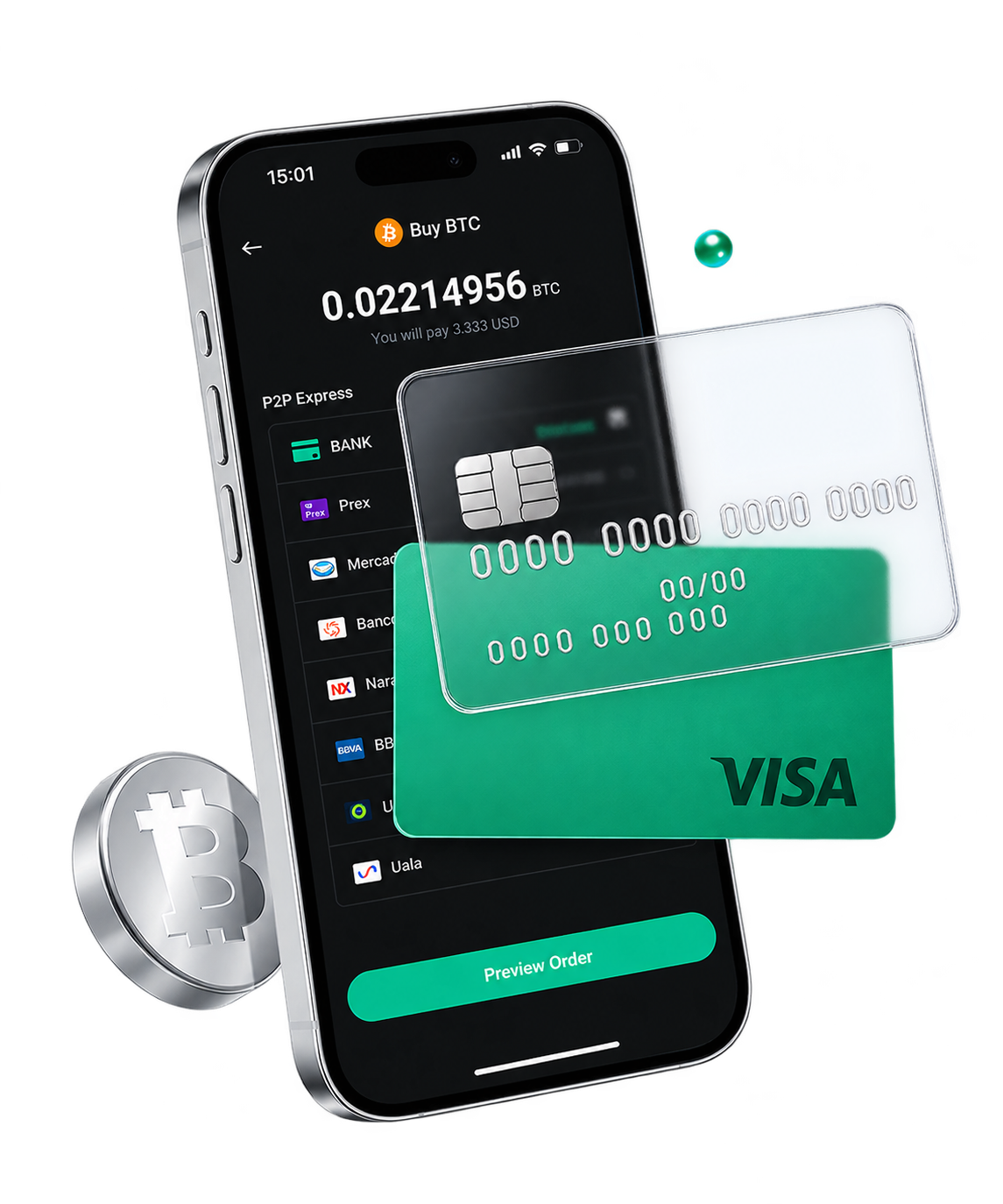
A payment card held in hand — an ETF is a financial instrument that trades on a stock exchange like a stock
Why are spot Bitcoin ETFs so popular with TradFi traders and institutions?
While the idea of trading Bitcoin is nothing new to crypto veterans, it has resonated loudly in traditional finance, where many believe it helps bridge the gap between the stock market and crypto. For those more familiar with trading stocks and bonds, a spot Bitcoin ETF is especially appealing because it can be seen as an ETF that directly tracks Bitcoin's price. Ultimately, this lets TradFi traders and institutions enjoy the upside of Bitcoin without directly buying and holding it.
Many argue that spot Bitcoin ETFs are popular among institutional investors not only for convenience and portfolio diversification, but because these institutions can finally participate directly in Bitcoin investment through an instrument that tracks its price. For a long time, insurers and financial institutions with strong purchasing power were restricted from buying crypto directly. With spot Bitcoin ETFs, they can now buy ETF shares and step into the crypto market without the burden of managing private keys and funding inflows.
Will spot Bitcoin ETFs be approved?
Since repeated rejections of spot Bitcoin ETF filings by firms like Ark Invest and 21Shares, there has been much speculation about whether spot Bitcoin ETFs would ever be approved. The situation shifted, however, when BlackRock announced its eagerness to join the spot Bitcoin ETF race. Given BlackRock's track record of bringing funds to market, the June 2023 filing made approval more or less a certainty. With firms such as Fidelity's FBTC ETF and Franklin Templeton's EZBC ETF now making final adjustments and refiling, sentiment has changed. Many no longer ask whether spot Bitcoin ETFs will be approved but when, as expectations run high.
Pros and cons of trading spot Bitcoin ETFs
Unsure about the pros and cons? Here are a few to keep in mind.
- Lower barrier to gaining BTC exposure.
- Grants institutional traders access to BTC.
- Can hedge BTC positions by shorting ETF shares and trading ETF options.
- Expensive expense ratios.
- You do not truly own BTC, since it is owned by the ETF manager.
- Trading is limited to normal stock-market hours.
- Potential risk: the ETF tracking BTC incorrectly.
Will Bitcoin go mainstream?
Will spot Bitcoin ETFs be the turning point for broad crypto acceptance? This question has become a hot topic among early crypto users assessing Bitcoin's odds of mainstream adoption. Although it is impossible to be certain whether crypto will go mainstream in the near term, some argue spot Bitcoin ETFs could be a key driver of a future crypto bull market. We also cannot rule out a slight correction in Bitcoin's price before the halving event.
BTC bull scenario: the halving drives inflows up
According to Standard Chartered analyst Geoff Kendrick's Bitcoin price forecast, if ETF-related inflows materialize as expected, Bitcoin could reach $200,000 by the end of 2025. He expects that once spot Bitcoin ETFs are approved and ready to trade, demand could surge as institutions snap up the Bitcoin needed for their reserves. That would give the price enough room to rise, possibly reaching $100,000 before the end of 2024.
Coincidentally, this timeline aligns with the upcoming Bitcoin halving cycle: as mining rewards halve again from 6.25 BTC to 3.125 BTC, Bitcoin's overall new supply will fall. Together these factors accelerate a price surge, as traders rush to buy for fear of missing the bull run.
BTC bear scenario: the “sell the news” worry
Although the launch of spot Bitcoin ETFs lays the groundwork for Bitcoin going mainstream, the road is not as flat as some expect. One main concern is Bitcoin's astonishing pace of appreciation and whether it can sustain that momentum.
As the crypto market's fear-and-greed index leans toward “extreme greed” again, risky behavior emerges, such as traders using leverage to speculate on Bitcoin's price for bigger gains. This could trigger a “buy the rumor, sell the news” scenario: prices rise after spot Bitcoin ETF filings, then see heavy selling once approval is confirmed.
Should you just buy Bitcoin directly?
When it comes to trading spot Bitcoin ETFs, one question will surely come up: why not just buy Bitcoin directly? Since trading spot Bitcoin ETF shares does not grant you ownership of the underlying Bitcoin held in the institution's reserves, if you care about custody, does it not make more sense to buy Bitcoin for yourself? Ultimately the decision depends on each trader's personal preference.
Because spot Bitcoin ETFs target TradFi traders and institutions less familiar with crypto exchanges and the trading process, this consideration is reasonable if you are already a crypto veteran. If you prioritize self-custody and do not want to be limited by regular stock-market hours, you may want to consider buying Bitcoin directly.
Beyond spot Bitcoin ETFs: the future of other spot crypto ETFs
While Bitcoin may be the first high-profile spot crypto ETF, it should not be the only tradable one.
Will spot Ethereum ETFs also be approved?
If spot Bitcoin ETFs are approved, we may see Ether, the second-largest crypto by market cap, become the next trump card in the spot crypto ETF space. Thanks to its powerful smart-contract capabilities and thriving DeFi ecosystem, a spot ETF that tracks the Ethereum price ecosystem in real time surely has great potential. Approving spot Ethereum ETFs could bring more liquidity and stability to the Ethereum network, strengthen confidence in the ecosystem and possibly drive further innovation. Compared with Bitcoin, however, differentiating factors such as staking and fees must be carefully weighed when building an ETF that tracks Ethereum's value.
Other spot crypto ETFs are on the way
Beyond Ethereum ETFs, will other spot crypto ETFs follow? Based on VanEck's and Grayscale's efforts with Solana ETNs and the Solana Trust, we may see a wave of spot crypto ETFs based on layer-1 protocols, such as a Solana ETF. That could flood the market with liquidity and a surge of interest in altcoins, as traders restricted from trading crypto can gain exposure to their favorite coins through corresponding spot crypto ETFs. Of course, each coin's path to a spot ETF still depends on many factors, including regulatory permission, market demand, and the stability and liquidity of the underlying asset.
What are stablecoins, major coins and altcoins
The concept of stablecoins
A stablecoin is essentially a cryptocurrency with a “peg”, usually to fiat such as the US dollar or other value-stable assets, so its price does not swing violently. A stablecoin is more like a medium of exchange. The earliest stablecoin was USDT (Tether), launched by Tether in 2014 and pegged 1:1 to the US dollar.
Because crypto assets are highly volatile, investors need a relatively stable bridge currency when trading to preserve on-chain value. Take the BTC/USDT pair: if investors expect Bitcoin to fall, they sell BTC for USDT through the BTC/USDT pair to preserve value.
Classification of stablecoins
Stablecoins generally fall into two types: collateralized stablecoins and algorithmic stablecoins.
- Collateralized stablecoins: backed by some asset to keep the price stable. By collateral type, they divide into (1) fiat-collateralized stablecoins, backed by fiat and minted 1:1, such as USDT, TUSD and USDC; and (2) crypto-collateralized stablecoins, backed by crypto assets, such as DAI.
- Algorithmic stablecoins: need no collateral and no other valuable asset to back them. They use an automatically executed monetary policy, keeping a stable price by expanding or contracting their own token supply, such as UST, BAC and AMPL.
What are major coins, and which are there
Crypto assets ranked at the top of the market-cap list are usually called major coins. They have larger communities, more users and higher market activity. Major coins generally carry strong consensus in the crypto market or substantial real-world utility, with better liquidity than ordinary crypto assets, and are widely recognized by the public.
Currently the leading major coins include BTC, ETH, ADA, XRP, BCH and LTC. Bitcoin (BTC) is the major of majors, holding the top spot by total market cap since its birth in 2009. In the vast majority of cases, Bitcoin is the absolute bellwether of the crypto market — generally, when Bitcoin rises, other major coins follow; when Bitcoin falls, other major coins fall too.
A mobile wallet showing major crypto assets such as Bitcoin, Ethereum, USDT Token and Litecoin
- Ethereum (ETH): the native token of the Ethereum network, also called Ether. Created by founder Vitalik Buterin, inspired by Bitcoin, it aims to build further on Bitcoin — improving transaction speed and carrying more applications via smart contracts. Ethereum is now the second-largest crypto after Bitcoin.
- Cardano (ADA): also called “Japanese Ethereum” because much of its early funding came from Japan, and its founder Charles Hoskinson was a co-founder of Ethereum.
- Ripple (XRP): the base currency of the Ripple network, operated by Ripple Labs (formerly OpenCoin), with a total supply of 100 billion. It aims to become a standard transaction protocol for banks worldwide, making money transfers as cheap and fast as sending email. Ripple is currently deep in litigation with the US Securities and Exchange Commission (SEC), which argues that XRP issued by Ripple is a security.
- Bitcoin Cash (BCH): appeared in December 2017 as a result of a Bitcoin hard fork, processing more transactions and speeding them up by increasing block size.
- Litecoin (LTC): a crypto created by developers inspired by Bitcoin. Like Bitcoin, it uses a proof-of-work mechanism and is a veteran major coin dating back to 2011.
What are altcoins, and which are popular now?
An altcoin is a digital currency that exists as an alternative to Bitcoin. As the market developed, the line between major coins and altcoins has blurred. For example, in the early days of the crypto market, Litecoin was also born by imitating Bitcoin, so it was once called the earliest Bitcoin altcoin — though that term is rarely used now.
Take Dogecoin (DOGE), first released in 2013. Although it is a relatively long-established crypto asset, before 2021 its price was low and its market-cap ranking was far down, keeping it in the altcoin ranks. Recently, pushed by Elon Musk and other celebrities and institutions, Dogecoin has surged repeatedly and its total market cap has jumped into the crypto market's top ten. Since Dogecoin is driven by short-term market sentiment, its future path remains to be verified, so it is hard to say whether it is an altcoin or a major coin.
In fact, an altcoin is not a fake or forged crypto asset; it is also a crypto asset produced with blockchain technology — it is just that altcoins are less recognized and less liquid than major coins.
As the market develops and capital rotates, a new batch of “star altcoins” appears at each stage. For example, animal-themed tokens emerged from a wave triggered by Dogecoin's surge, named after various animals, such as SHIB, SDOG, AKITA and PIG. Meanwhile, DeFi altcoins and NFT-concept altcoins also maintain some heat.
How RWA, blockchain and the US dollar are reshaping global finance
The tokenization of real-world assets (RWAs) is transforming the financial landscape, and blockchain technology and the US dollar play a key role in that change. With the tokenized-asset market projected to reach $10 trillion by 2030, this shift marks a structural evolution of global finance. This article explores how RWA, blockchain and the dollar are reshaping the financial ecosystem, the opportunities they bring and the challenges they face.
What are real-world assets (RWAs), and why do they matter?
Real-world assets (RWAs) are tangible or financial assets — such as real estate, private credit or government bonds — represented on the blockchain through tokenization. Tokenization is the process of converting these assets into digital tokens, enabling fractional ownership, greater liquidity and 24/7 trading.
RWAs matter because they bridge the gap between traditional finance (TradFi) and decentralized finance (DeFi). By using blockchain technology, RWAs reduce settlement delays, compliance costs and illiquidity, creating a more efficient, transparent and accessible financial system. That makes them attractive to both institutional and retail investors.
Stacked asset cards — real-world assets tokenized into divisible, transferable digital claims
The role of blockchain in RWA tokenization
Blockchain technology is the foundation of RWA tokenization, providing infrastructure for secure, transparent and tamper-proof transactions. Today, Ethereum dominates the RWA space, hosting over 75% of tokenized assets. Newer layer-2 solutions and other blockchains such as Avalanche and IOST are gaining attention for scalability and cost efficiency.
Key technological advances driving RWA growth
- Zero-knowledge proofs (ZKPs): enable privacy-preserving compliance, keeping sensitive data confidential while meeting regulatory requirements.
- Cross-chain interoperability: ensures seamless flow of tokenized assets between blockchains, boosting liquidity and ecosystem integration.
- Purpose-built RWA blockchains: platforms such as Plume and IOST are designed for the unique needs of tokenized assets, including compliance, liquidity and lifecycle management.
The dollar's role in the RWA ecosystem
Stablecoins pegged to the US dollar have played an important role in RWA growth. Stablecoins hold a share of more than $240 billion in the RWA market, providing a stable medium of exchange and base for tokenized assets.
As the RWA market matures, it is shifting toward higher-yielding tokenized assets, such as Treasury-backed tokens and private credit. These assets offer real yield: Treasury-backed tokens at 4–5% and private-credit tokens at 8–10%, highly attractive to institutional investors.
Institutional adoption of RWAs
Major financial institutions such as BlackRock, Franklin Templeton and JPMorgan are leading the adoption of tokenized assets. For example, BlackRock's BUIDL fund holds $2.9 billion in tokenized US Treasuries, showing growing confidence in this emerging asset class.
Why institutions are embracing RWAs
- Yield opportunities: tokenized assets offer yields competitive with traditional financial instruments.
- Operational efficiency: blockchain reduces settlement times and compliance costs, simplifying operations.
- Regulatory clarity: frameworks such as the US GENIUS Act give institutions the regulatory certainty they need to participate.
Advantages of RWA tokenization
- Greater liquidity: tokenization enables fractional ownership, making traditionally illiquid assets easier to access.
- 24/7 trading: unlike traditional markets, tokenized assets can trade around the clock.
- Programmable compliance: smart contracts automate compliance, cutting costs and error rates.
- Global accessibility: blockchain removes geographic barriers, letting investors worldwide take part.
Challenges and risks of the RWA market
Despite its promise, RWAs still face challenges:
- Regulatory hurdles: although progress has been made, regulatory frameworks are still evolving, creating uncertainty for market participants.
- Lack of secondary markets: the absence of robust secondary markets limits the liquidity of some tokenized assets.
- Infrastructure gaps: composability and seamless integration between platforms remain a challenge.
The future of RWA: market growth and forecasts
The RWA market is transitioning from speculative crypto cycles to utility-driven growth. With a projected $10 trillion by 2030, tokenized assets are poised to become a cornerstone of global finance. RWA-focused blockchains and modular infrastructure solutions will play a key role in meeting this market's unique needs.
Key trends to watch
- Institutional adoption: as regulatory clarity improves, more institutions are expected to enter the RWA space.
- Technological innovation: advances in ZKPs, cross-chain interoperability and purpose-built blockchains will drive growth.
- Shift toward utility: focus is moving from speculative assets to real-world use cases such as private credit and real estate.
Conclusion: a new era of finance
The convergence of RWA, blockchain and the US dollar is opening a new era of financial innovation. By tackling inefficiencies in traditional finance and unlocking new opportunities, tokenized assets will transform the global financial ecosystem. As the market keeps growing, understanding these developments will be crucial for investors, institutions and policymakers.
Crypto impersonation scams: how to spot and avoid fraud
As cryptocurrencies like Bitcoin and Ethereum spread, scams targeting unwary traders have grown more sophisticated. These scams can involve fraudsters impersonating trusted entities or influencers in crypto, tricking people into sending crypto or revealing sensitive information. Impersonators may pose as crypto exchange support, government officials, or promoters of “celebrity-endorsed” high-yield crypto projects, targeting would-be victims via social media, email and phone. Their common tactics include promising high returns or threatening legal consequences to pressure victims into sending crypto quickly. In this article, we dig into the most common impersonation scams today and give you ways to protect your crypto assets.
Overview
- Scams grow with crypto adoption: as Bitcoin and Ethereum spread, scams targeting traders increase too, such as impersonating trusted figures in crypto.
- Impersonation tactics: fraudsters pose as crypto exchange support, government officials, celebrities or other influencers or entities. They lure people via social media, email and phone into sending crypto or sharing private information such as private keys.
- Promises and pressure: these frauds often use the lure of high returns or the threat of legal consequences to force people to send crypto immediately.
- Celebrity tokens: be wary of celebrity tokens in crypto — some are genuine, but others may be part of a fraud scheme.
- Government and financial institution impersonation: scammers may pose as government or bank staff and demand that you send crypto.
A gold USB offline storage device — keep private keys and recovery phrases offline so scammers get no opening
Are “celebrity tokens” real?
For crypto traders, telling real celebrity tokens from fake ones matters, because crypto's decentralization makes fake tokens common and careful scrutiny often necessary. Also, while some celebrities show interest in crypto assets, actions such as issuing tokens can draw them into controversy, and some celebrity tokens are highly volatile and do not keep rising just because of fame. Some well-known figures even face lawsuits over issuing crypto. The key to legitimacy is the difference between genuine endorsement and endorsement for financial gain or fraudulent motives. The US SEC has noted this and stresses the importance of caution around celebrity-backed crypto projects. Traders need to investigate the motives behind endorsements, since undisclosed compensation for promoting a product may be illegal. When assessing a celebrity token, consider:
- Research the celebrity's involvement: genuine interest or understanding of crypto may indicate a real endorsement.
- Look for disclosures: legitimate promotions must clearly state any financial interests or affiliations.
- Verify the crypto's legitimacy: research celebrity-endorsed or celebrity-issued crypto to make sure it is not part of a “rug pull”.
Although celebrity tokens can raise awareness of crypto, they should not be the main factor in your decision to trade. Before any crypto-related decision, thorough research and understanding of the underlying risks is essential.
Does the government really ask you to send crypto?
Some scammers pose as government agencies and demand that victims send crypto immediately. This often exploits fear of powerful entities, leading some people to hand over crypto impulsively. The US Federal Trade Commission (FTC) has warned about scams that impersonate government representatives and demand crypto. Any request to send crypto — whether for taxes, fines or to “protect” your funds — may be a scam. Criminals may pose as representatives of various agencies or law enforcement, using QR codes and instructing targets to send funds via crypto wallets or ATMs. They may claim you have unpaid taxes or fines and coerce you into sending crypto immediately. How to guard against these frauds:
- Be wary of unexpected communications, especially those from unfamiliar sources asking for crypto, including phone, email and social-media messages.
- Avoid making transaction decisions during online conversations, minimize mention of crypto transactions, and separate decision-making from actual execution.
- Verify sending requests through other channels, and contact the claimed source to confirm authenticity.
Are financial institutions' requests legitimate?
As fraud tactics grow more sophisticated, staying alert to scammers impersonating financial institutions is essential. The key question: why would a financial institution ask you to send crypto? Scammers posing as financial institutions are not rare. These fraudsters craft careful schemes, often using emails or messages that look like they come from well-known institutions and asking you to send crypto or make transactions. The FTC and cybersecurity experts warn that such requests are often deceptive. Steps to verify authenticity:
- Check the source: examine the email address or contact information carefully. Scammers often use addresses very similar to but slightly different from official ones.
- Contact the institution directly: if asked to make a crypto transaction, contact the bank or institution through official channels. Use contact details listed on its official website, not those in suspicious communications.
- Beware of urgency: scammers often create urgency to bypass your reasoning. Legitimate institutions will not force you to rush a crypto transaction.
- Look for warning signs: grammar errors, unsolicited invitations and suspicious offers are common signs of fraud.
- Use secure websites: before providing any personal information, make sure the site is secure — check for “https://” in the URL and a padlock icon.
- Stay informed: keep up with scammers' latest tactics.
Remember, crypto transactions are usually irreversible. Recovering assets after sending crypto is extremely difficult. This immutability is one reason scammers favor crypto for fraud. When handling crypto transaction requests from financial institutions, caution and care are essential. Always confirm the legitimacy of a request through official channels and be wary of scammers' common tactics.
Is technical support real?
In the crypto world, supposed technical-support requests can be confusing. The key question: do these technical-support requests come from legitimate sources? Again, determining the authenticity of crypto-related technical-support requests is the first step to avoiding becoming a victim of fraud. As crypto spreads, technical-support scams evolve too. Scammers often pose as trusted technical-support agents, offering to help with a non-existent or fabricated problem, then asking you to send crypto. The FTC and cybersecurity experts warn that these advanced scams are increasing. Steps to verify crypto-related technical-support requests:
- Official contact channels: some companies offer genuine technical support and will not ask for crypto first. If you receive an unsolicited technical-support offer, contact the company directly through official support channels.
- Payment method: if the supposed technical-support agent asks for crypto, be wary. Traditional technical-support providers usually do not accept crypto because it is irreversible and hard to trace.
- Urgency and pressure: scammers often create urgency or pressure you to act immediately. Legitimate support gives you time to think and will not force you to rush a payment.
- Research and verify: research technical-support services online. Look for reviews or complaints that may indicate a scam. Also compare the phone number or email provided with those listed on the company's official website.
- Refuse remote access: if support asks for remote access to your device and then asks for crypto, be wary. Granting remote access can put your personal and financial information at risk.
- Understand scam tactics: familiarize yourself with scammers' common tactics by regularly researching and following trusted crypto news sources.
Can crypto exchanges be trusted?
Whether centralized or decentralized, crypto exchanges are among the most common crypto-related platforms you may encounter. That also makes them a target for impersonation scams. Untrustworthy websites may imitate well-known exchanges to attract traders with promises of high returns or low fees. To avoid being fooled, identifying legitimate exchanges is essential. Key factors to consider:
- Website authenticity: check for the green “https” padlock in the exchange's address bar. Scammers often do not obtain “https” verification for their fraudulent sites. To avoid fake sites, type the exchange's URL manually or use a bookmark.
- Security measures: reliable platforms usually emphasize user security and implement 2FA (two-factor authentication), SMS or email notifications of suspicious activity, and cold storage for most assets. These measures prevent unauthorized access and online risk.
- Track record: research the exchange's history. Learn about any past security breaches and how they were handled — for example, compensating affected users and strengthening security. Online platforms such as user feedback and social media offer valuable information about an exchange's reputation.
- Verification process: to prevent money laundering and other illegal activity, legitimate exchanges have strict ID verification procedures. These may involve submitting government-issued ID and disclosing personal information (identity verification).
- Transparency and customer support: established exchanges are transparent about their processes — such as ownership, location and fees — and provide timely, supportive customer service. Be wary of exchanges with little detail about their team or processes.
- Trading volume and liquidity: legitimate exchanges usually have high trading volume and liquidity, indicating a large user base and active trading. Be cautious with platforms showing low user activity or volume.
By carefully considering these factors, you can protect your crypto and avoid becoming a victim of fraudulent exchanges. Before making any trade on a specific platform, thorough research and vigilance are essential.
Are ICOs (initial coin offerings) real?
Some ICOs attract great attention in crypto circles, drawing traders to put in funds in hopes of returns. This attention and growth potential make ICOs a target for scammers. Some wrongdoers craft fake ICOs, luring funds with the promise of high returns before absconding with the money. So traders must take steps to tell genuine ICOs from fraudulent ones. Key factors when evaluating an ICO:
- Analyze the white paper and roadmap: an ICO's white paper is its detailed plan, offering insight into goals, technology and execution strategy. A full assessment should review the technical elements, the feasibility of the project's goals, and the reliability and transparency of the information provided.
- Team and reputation: research the team behind the ICO. Their backgrounds, track record and previous projects can reflect their ability and credibility. Negative news or controversy associated with team members should raise caution.
- Token distribution and sale details: analyze how tokens are distributed among stakeholders. Check the lock-up periods for tokens held by team members to ensure long-term commitment. A token's utility within the project ecosystem is also a key consideration.
- Community and media engagement: a strong community and positive media coverage are signs of a healthy ICO. Assess the size and activity of the community on platforms such as Telegram, Twitter and Reddit. Media coverage and influencer support can add credibility.
- Venture trading and project stage: check whether well-known venture capitalists have traded the ICO, which can be a sign of legitimacy. Understanding the project's current stage is also essential to assessing progress and potential for sustainable success.
- Operational transparency: when reviewing an ICO's activities, ensure it complies with transparency requirements, including following legal and regulatory requirements. Considering the laws and regulations governing ICOs is essential.
- Market viability: assess the problem the ICO aims to solve and the feasibility of its solution. The size and potential growth of the target market are key to predicting an ICO's potential success — while also being wary of overly tempting promises and expectations of extreme returns.